

The Imaginative Mediator IM/002
Integrative Mediation, Relational Justice, and the Moral Core of Mediation


More Fairy Tale Magic
In my last Field Note, The Imaginative Mediator: Integrative Law and the Moral Imagination, I speculated that mediation might have a moral core embracing truth, justice, and care. Drawing on Vigen Guroian’s exposition of Carlo Collodi’s Pinocchio, I suggested that mediation is not true to that core when it settles for transactional compromise and tidy closure built on false narratives, however tempting they may be to the parties. Authentic or integrative mediation, like Pinocchio’s journey to becoming real, rests on the capacity to tell a true story - a real story - and, in the light of that story, to extend love (or what, in this context, I will call care) to another.
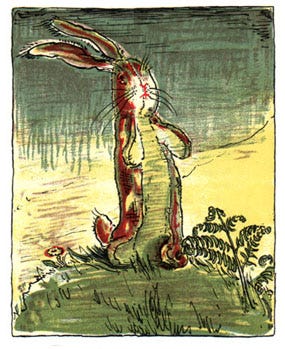
This Field Note continues that reflection through another of Guroian’s sources, Margery Williams’ 1922 classic, The Velveteen Rabbit.
If Pinocchio’s realness is attained through love (care) given, The Velveteen Rabbit awakens our imagination to recognise that realness also grows from love, or care, received and that its fullest expression is found in authentic relationship, in community - in an accord based on covenantal integrity: the moral coherence that binds truth and care to their wider human context.
Covenantal integrity is Noel Preston’s term. I’ll say something more about it in my next Field Note. But let us start with the wisdom of the characters in Williams’ story.
The Skin Horse’s wisdom, “When a child loves you for a long time, not just to play with, but really loves you, then you become real,” conveys a truth that lies at the core of mediation. But it is only part of the story.
When the Velveteen Rabbit, having met wild rabbits from the forest, questions whether he is really real, the Nursery Magic Fairy explains that there is a difference between being real to the Boy and being real to everyone.
Vigen Guroian reads this as a threefold movement: first, the Rabbit is real as a made thing, a toy; then he becomes real to the Boy through love received; and finally, he becomes really real when the Fairy carries him into the forest to join the company of wild rabbits explaining,
“You were Real to the Boy because he loved you. Now you shall be Real to everyone.”
She then instructs the wild rabbits to extend kindness and hospitality - to extend care - to their new playfellow:
“You must be very kind to him and teach him all he needs to know in Rabbit-land, for he is going to live with you for ever and ever.”
Realness, or authenticity, is achieved through sustained, mutual care.
In the mediation room, we might not easily imagine love. But we can imagine care - the kind of care that requires disciplined attentiveness, responsibility, competence and responsiveness in order to resist sentimentality. This calls for a moral stance that allows the parties to be seen, to be heard, and to have what they say to each other matter. It echoes what Joan Tronto describes as attentive care and, perhaps, what Martin Buber saw in the I–Thou relationship: the moment of encounter in which both become real to one another.
Yet, where Buber’s I–Thou relationship begins with embrace of the other as a moral presence, mediation as a practice of integrative peacemaking need not end there. Its task is not only to restore relationship but to sustain it in community. Its moral horizon expands beyond encounter, beyond the tame magic of the Nursery, to the wild vitality of the Forest - to what we might call We–Together: a space of shared belonging, where the work of community is held and cared for collectively.
To imagine mediation in this way is to tap its moral core - the place where truth and care meet, where the stories we tell and receive make us real to one another. From that clay, integrative accord can be shaped - the kind of accord that points us toward covenantal integrity and the moral practice of relational justice.
References
Guroian, V. (2023). Tending the Heart of Virtue: How Classic Stories Awaken a Child’s Moral Imagination. Oxford University Press.
Preston, Noel (2014). Understanding Ethics. Annandale, NSW: The Federation Press.
Tronto, J. C. (2015). Who Cares?: How to Reshape a Democratic Politics (1st ed.). Cornell University Press.
Williams, Margery (1922). The Velveteen Rabbit or How Toys Become Real. New York, Doubleday & Company. Project Guttenberg eBook (2004). The Project Gutenberg eBook of The Velveteen Rabbit, by Margery Williams