

The Imaginative Mediator IM/001
Integrative Law and the Moral Imagination

This Field Note opens a series exploring what it means to practise mediation with moral imagination inside the integrative-law tradition.
Integrative Law and The Moral Imagination
In the course of designing a veterans’ mediation programme, I’ve needed to reflect on the moral content of different dispute-resolution models - the meanings, values, and virtues that qualify them as authentic and integrative models for peacemaking.
That reflection has taken me to some unusual places.
Within the integrative-law movement, J. Kim Wright reminds us that law and mediation can be instruments of healing and transformation rather than mere dispute management. An authentic process must therefore be integrative: it must join head, heart, and hand; structure, purpose, and relationship.
Mark Johnson adds that moral imagination is not an abstract faculty but a way of perceiving meaning in lived experience.
And Vigen Guroian, drawing from Carlo Collodi’s The Adventures of Pinocchio, warns against deceptive self-narrative. Pinocchio’s journey toward becoming a real boy, he argues, advances as he learns to tell a true story - as his awakened virtue begins to triumph over his woodenness.
“So long as self-deception is at the source of a person’s perception of things,” Guroian writes, “he or she cannot mature into the fullness of being human or lead a successful course through life.”
Taken together, these thinkers reveal that mediation itself contains a moral core: a set of assumptions about truth, justice, and care that shape every process we design and every peace we try to build.
That realisation led me to revisit an experience that first exposed, for me, how fragile that moral core can become.
A False Peace
More than a decade ago, while training as a narrative-mediator, I observed a role-played workplace discrimination conflict.
The worker presented the victim narrative. The employer then invented a convenient explanation for what had “really” happened - “Oh! It wasn’t like that at all” - and the worker agreed to adopt it as the shared, re-scripted account of the incident.
Problem solved. Or so it seemed.
Yet something was wrong. Although the new narrative was tidy, it was based on a falsehood.
Narrative mediation is morally charged. It is not unique in that. But like most forms of mediation, it often treats its moral dimension as implicit and can stop short of explicit moral exploration. A constructed narrative can be manipulated toward therapeutic or palliative efficacy and away from what virtues, such as truth or even justice, may be left dormant at its core.
That demonstration revealed how easily mediation can drift into moral indifference when comfort or quietude becomes the measure of success.
And it has troubled me ever since.
Oh Pinocchio! What is happening to your nose?
Guroian reads Pinocchio’s transformation as a moral awakening – the animation of his moral core. Pinocchio’s humanity, he argues, is present from the start but is blocked by his woodenness. Pinocchio’s false self-narratives, his confusion between physical and moral causality, and his gradual learning to tell the truth as part of becoming a real boy - a good boy - all mirror the mediator’s challenge: distinguishing a story that works from a story that is true.
When I saw, in the role play I described earlier, how the employer’s invented explanation became the agreed narrative, what unsettled me was, not the absence of technique, but the absence of reality - of truth.
The outcome was not real. It had the shape of peace but none of its substance - just as Pinocchio, still wooden, mimics life without yet possessing it.
It was a failure at the moral core of the process.
Animating What Lies Within
And yet, Guroian reminds us that Pinocchio’s humanity was present from the start in that “mysteriously animist piece of wood” out of which Geppetto fashioned the puppet. It only needed to be awakened.
Perhaps mediation, too, is like that. Its humanity, its moral core, is already there - hidden at times beneath layers of procedure and performance.
The work of moral imagination is not to install that core but to awaken it; not to add virtue, but to let it shape the peace toward which it strives.
My reading of Guroian has helped me see that authentic mediation design and practice call not for tidy settlement but for real peace - peace that has vitality because it is animated by virtue, by justice, and by truth.
References
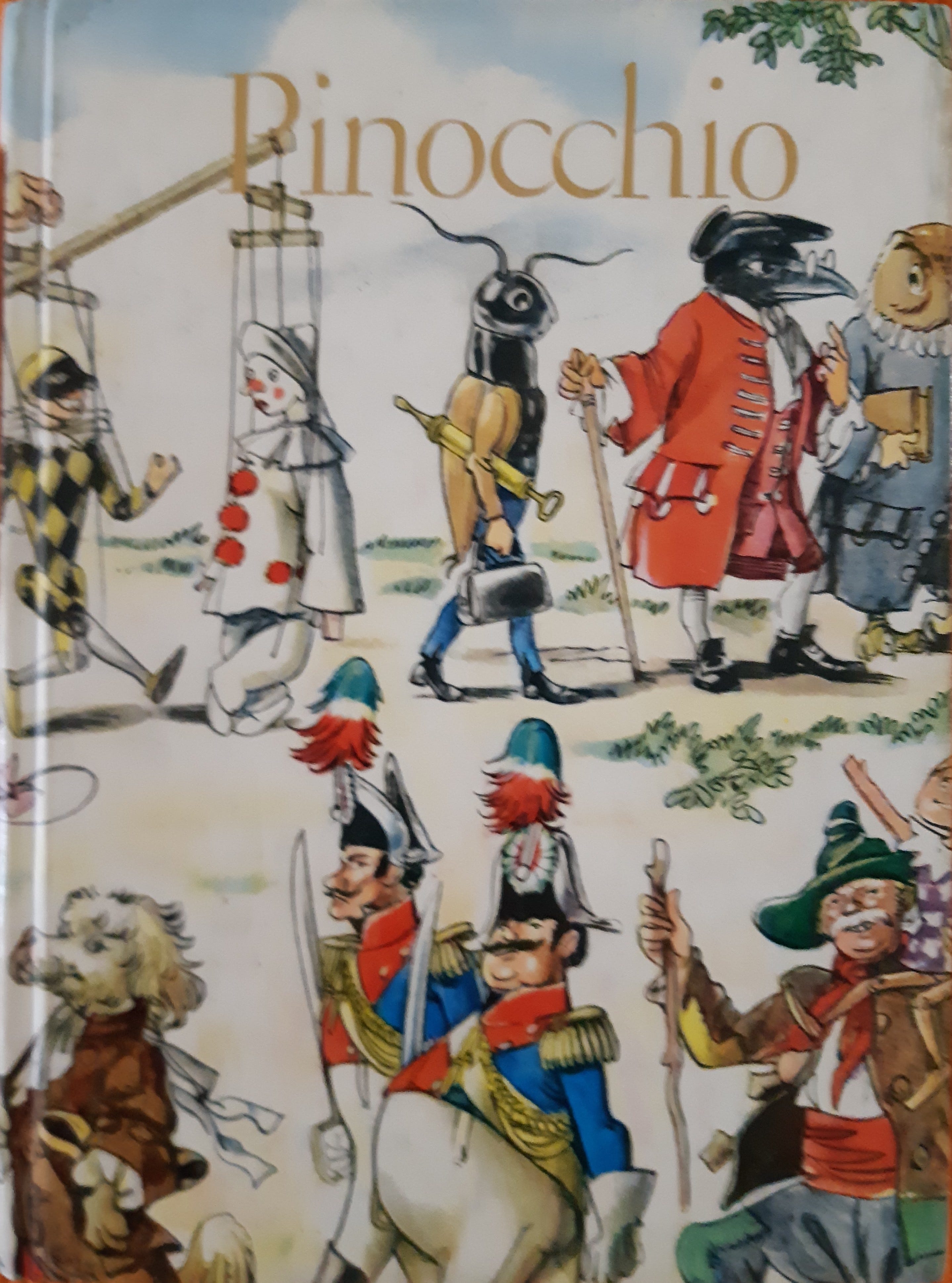
Collodi, C. (1946). The Adventures of Pinocchio (with illustrations by Fritz Kredel) Translated by M. A. Murray. 1980 printing, Grosset & Dunlap.
Guroian, V. (2023). Tending the heart of virtue: How Classic Stories Awaken a Child’s Moral Imagination. Oxford University Press.
Johnson, M. (1993). Moral imagination: Implications of Cognitive Science for Ethics. University of Chicago Press.
Wright, J. K. (2010). Lawyers as peacemakers: Practicing Holistic, Problem-solving Law. American Bar Association.
Wright, J. K. (2017). Lawyers as changemakers: The Global Integrative Law Movement.